Stop Managing People. Start Architecting FLOW
Enduring velocity is not the result of harder management. It is a byproduct of structural integrity.
Most organizations achieve high performance by ‘red-lining’ their talent – an unsustainable strategy that produces short-term results at the cost of long-term systemic decay.
Through The Systemic Flow lens, we view the organization as a single, integrated organism to differentiate between temporary momentum and sustainable flow.
We analyze the four foundational pillars of your human architecture to determine if your team’s velocity is a permanent operational asset or a structural fragmentation risk.

The four pillars of team dynamics
PRESENCE
The Assessment: We audit your team’s focus capital – the precious fuel required for enduring velocity.
Fragmentation often begins with a high “Attention Residue” tax, where constant pings prevent the deep-work blocks required for high-value outcomes.
We measure whether your team’s cognitive load is renewable and healthy, or if the system is trending toward systemic exhaustion.
ALIGNMENT
The Assessment: We examine the “connective tissue” of your organization: your synchronization rituals.
We identify where information silos create friction and measure the Role Clarity required to keep talent mapped to “Needle-Movers.”
This assessment determines if your team is moving as a synchronized unit or fighting against the relational drag that leads to long-term decay.
OPERATIONAL
The Assessment: We analyze your execution engine to locate the “Flow Channel” – the precise point where collective challenge perfectly matches skill level.
By identifying handoff friction and structural drag, we determine whether your current output results from architectural efficiency or from simply “red-lining” your talent in an unsustainable burst of speed.
RESILIENCE
The Assessment: We look at the system’s feedback protocols and narrative integrity. True resilience is a systemic learning loop, not a personal endurance test.
We measure the team’s ability to integrate failure without losing synchronization, assessing if your culture possesses the structural resilience needed to maintain lasting harmony when market pressure doubles.
5 Hard Truths about your team’s shadow cost
Truth 1: You are paying for talent you cannot access.
You’ve paid 100% of the payroll, but fragmentation is capping your ROI at 60%. Most teams lose 30–40% of their productive capacity to the energy wasted navigating a broken architecture.
Truth 2: You cannot manage your way out of a structural leak.
More meetings and more Slack pings are “Management Noise,” not “Architectural Flow.” They make the problem worse, not better. Adding more “quick syncs” only increases the Relational Tax, further slowing down your execution engine.
Truth 3: High output is a liability if it isn’t sustainable.
If your team is “red-lining” to hit targets, your flow is a temporary burst, not a permanent asset. Unsustainable sprints lead to systemic decay, resulting in inevitable burnout and focus erosion.
Truth 4: Fragmentation compounds exponentially with growth.
Friction doesn’t grow linearly. As you add people, the “Connective Tissue” becomes the primary bottleneck. An exponential cost of capital, talent, and efficiency follows shortly.
Truth 5: Silence is the loudest signal of systemic risk.
A team that isn’t raising issues isn’t necessarily in flow. Without a Narrative Feedback Loop, failure remains buried in the system instead of being integrated into a learning loop, creating a high Structural Integrity Risk.
The Roadmap to Systemic Flow: How We Elevate Your Team
Great leadership isn’t about pushing your people harder; it’s about removing the friction that holds them back. We use a structured, proven approach to help you transform overwhelmed groups into aligned, high-performing teams.
Here is how we get you there:
Step 1: The Baseline (Pinpoint the Friction)
We don’t guess; we measure. Using the TFI Diagnostic, we quickly identify the hidden bottlenecks draining your team’s energy and stalling momentum. You get immediate clarity on exactly what is working and what needs to change.
Step 2: The Deep Dive (Map the System)
Once we know where the friction is, we look at why it’s happening. Through a Systemic Integrity Audit, we map your organization’s workflow, communication habits, and leadership capacity. We find the root causes of burnout and misalignment so we can fix them at the source, not just treat the symptoms.
Step 3: Sustainable Execution (Install the Protocols)
We don’t just hand you a report and walk away. Together, we implement custom Systemic Flow Protocols designed specifically for your team’s unique rhythm. We build lightweight, sustainable rituals that elevate performance and ease the workload for everyone involved.
Start Your Free TFI Diagnostic
The Full-Scale Systemic Integrity Audit.
The Free TFI Diagnostic provides your initial score for the Team Fragmentation Index. The Full Systemic Integrity Audit ($950) provides your roadmap.
For leaders who recognize the immediate impact of the Shadow Cost, we offer an in-depth, surgical deep-dive. We audit every interaction point, ritual, and role-handoff to pinpoint exactly where focus is being lost and capital is leaking.
What You Receive:
- An extensive Structural Integrity Report: Your team’s data mapped against our 4-pillar architecture.
- Specific Shadow Cost Calculation: The monthly dollar value of your team’s current systemic leaks.
- Executive Debrief (60 Mins): A direct consultation with Gabriel to review the investigative findings and identify the specific, custom Systemic Flow Protocols required to restore your team’s operational integrity and enduring velocity.
100% of the audit fee can be credited toward your custom Systemic Flow Protocols implementation
For over a decade, I operated within the traditional frameworks of systemic coaching. While I saw individual lives transform, I realized that even high-performance teams were often built on sand. They were hitting targets through sheer force of will: a brute-force strategy that leads to inevitable fragmentation, burnout, and a massive Shadow Cost of lost capital.
I spent 14 years as an ICF-trained executive and team coach studying the precise seams where human systems break. I realized that the answer to enduring velocity didn’t lie in more ‘management,’ but in better Architecture.
To build The Systemic Flow, I integrated the mechanics of modern performance psychology with the ancient stillness of Eastern traditions. This wasn’t a philosophical choice; it was an engineering requirement. Sustainable output requires a system that can handle market load without sacrificing the human element.
My mission is to help leaders stop managing friction and start architecting flow.
Gabriel Trandafirescu | Systemic Architect
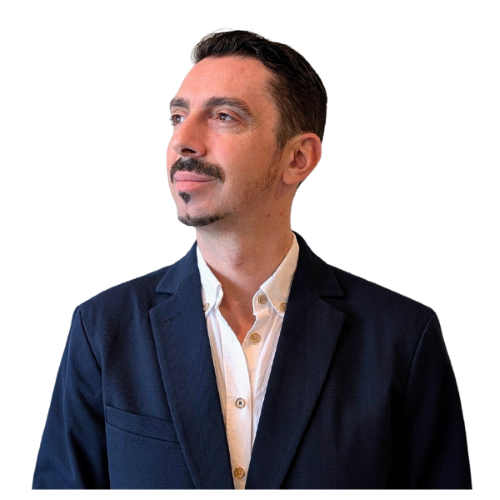
When we first started working together, I was a mess and had lost my sense of direction as an entrepreneur. Gabriel has instilled new beliefs and helped me navigate through all of the recent obstacles in my business, which in turn led me to a happier life, a better business, and gave me a better mindset.

He loves what he is doing! Gabriel helped me get out things that I have never thought of before and demanding focus on your important areas. I enjoy working with him because he does not hesitate to get you of your comfort zone and channel your ideas towards results.

Get to your goals sooner with Gabe! He is a powerful coach, advocate and community leader! Gabe’s ability to lead important team discussions at a time when there is much uncertainty is a reflection of his exemplary leadership skills and coaching talents. His approach and expertise in leading purpose driven team inspires trust, cohesion and increased clarity.

Gabriel’s style is open, uncomplicated and direct. I appreciate the way he always keeps the story about you, the subject of the coaching, and how he challenges you to define your very personalized answer to each and every question.

FAQ
The TFI is a structural stress test for human systems. It measures the “Cognitive Leak” within your organization across four forensic layers: Presence, Alignment, Operational Flow, and Resilience. While traditional surveys measure “employee satisfaction,” the TFI identifies the specific seams where your team’s talent capital is being consumed by systemic friction.
The calculation is rooted in the science of Attention Residue. We analyze the frequency of context-switching (unscheduled pings), the clarity of role borders, and the “frictional tax” of your current rituals. A high TFI score (e.g., 50+) indicates that you are paying for 100% of your payroll but only receiving ~70% of its productive potential. The remaining 30% is lost to the architecture, not the individuals.
Upon completion of the Snap Diagnostic, you will receive an immediate classification into one of the four tiers of Systemic Integrity. This report identifies your Systemic Leak—the specific percentage of your payroll currently being lost to architectural friction. From there, you have the option to apply for the Full-Scale Systemic Audit to pinpoint the exact locations of your focus-capital leaks.
The Forensic Audit is a 7-day intensive diagnostic window. We move beyond “self-reporting” and into raw data collection. The process involves:
The Deliverable: You receive a 20-page Architectural Roadmap. This document is a surgical blueprint that maps your specific failure points and provides the hardware specifications needed for the Step 3 Installation Sprint.
Team-Wide Cognitive Stress Test: Every member of your organization is audited for attention recovery speed and ritual load.
Forensic Observation: I shadow one primary internal ritual (e.g., a weekly sync) to identify the “seams” where information synchronicity is breaking down.
No. The Audit methodology is designed to be mode-agnostic. It can be conducted entirely remotely via secure digital observation and video conferencing, in-person, or a mix of the two. Both formats provide the same level of surgical precision.